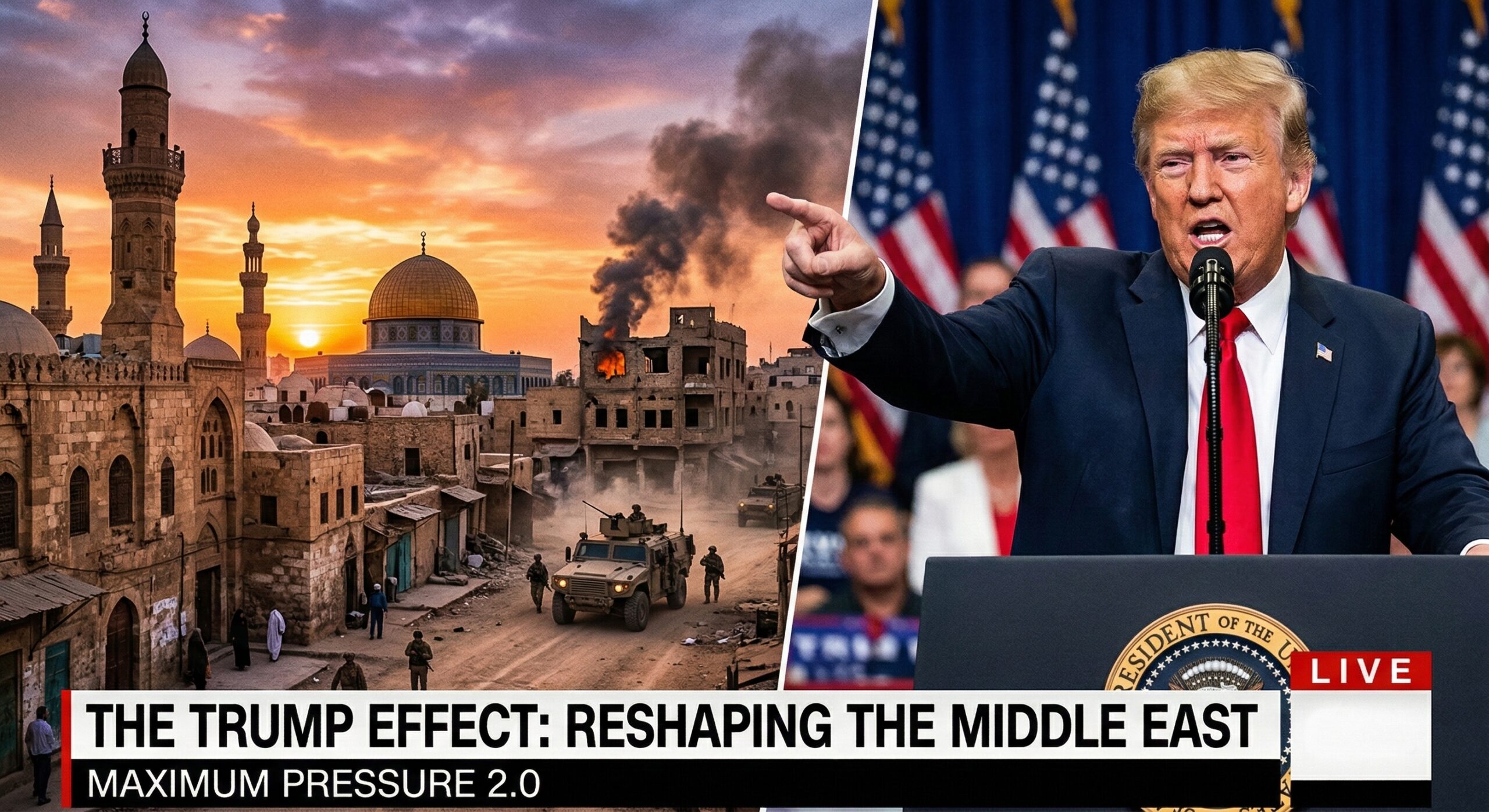
Since Donald Trump’s official return to the White House, the geopolitical landscape of the Middle East has entered an entirely new and unpredictable phase. Moving away from the cautious diplomacy of the previous administration, the 47th President of the United States is deploying his signature “deal-maker” tactics, forcing the entire region to recalibrate.
Here at BlinkReport, we break down how Washington’s latest strategic moves are sending shockwaves through the Middle East’s most volatile hotspots.
1. The Activation of “Maximum Pressure” 2.0
Unlike the prolonged and often stalled diplomatic efforts of the past few years, President Trump has wasted no time reinstating his hardline “maximum pressure” strategy. The primary targets are, undeniably, the militant factions backed by regional adversaries.
By aggressively tightening economic sanctions and unequivocally backing traditional US allies in the region—such as Israel and Saudi Arabia—the administration is sending a clear, uncompromising message. This bold stance has pushed diplomatic tensions to a boiling point, forcing armed groups in Gaza, Lebanon, and across the Red Sea to urgently rethink their next moves.
2. The Red Sea Crisis: A Threat to Global Trade
The reality of modern warfare is that it extends far beyond ground combat. The continuous threats to vital maritime routes in the Red Sea have severely disrupted global supply chains.
Under Trump’s command, military analysts suggest the Pentagon is prepared to execute far more decisive deterrence measures to protect commercial vessels and oil tankers. However, deploying an “iron fist” in these contested waters carries the heavy risk of sparking a broader, regional maritime conflict.
3. Oil Prices: The Ultimate Thermometer of Geopolitical Tension
The average citizen might not track daily Middle Eastern politics, but they undoubtedly feel its impact at the gas pump. Any minor disruption in the Gulf’s oil fields—or a single hardline declaration from Trump—is enough to send global energy markets into a frenzy.
Investors are holding their breath to see if the US will significantly ramp up domestic oil production. Doing so could strategically drive down global crude prices, effectively choking off the massive revenue streams that fund opposition forces in the Middle East.
Conclusion
One thing is certain: the Middle East under Donald Trump’s foreign policy will be anything but predictable. His abrupt, transactional approach to international relations could either force a definitive, heavily-armed peace or act as the spark that ignites an already overflowing powder keg.
How do you think the US’s new diplomatic approach will affect the Middle East? Will peace be restored, or is further escalation inevitable? Let BlinkReport know your thoughts in the comments below!