
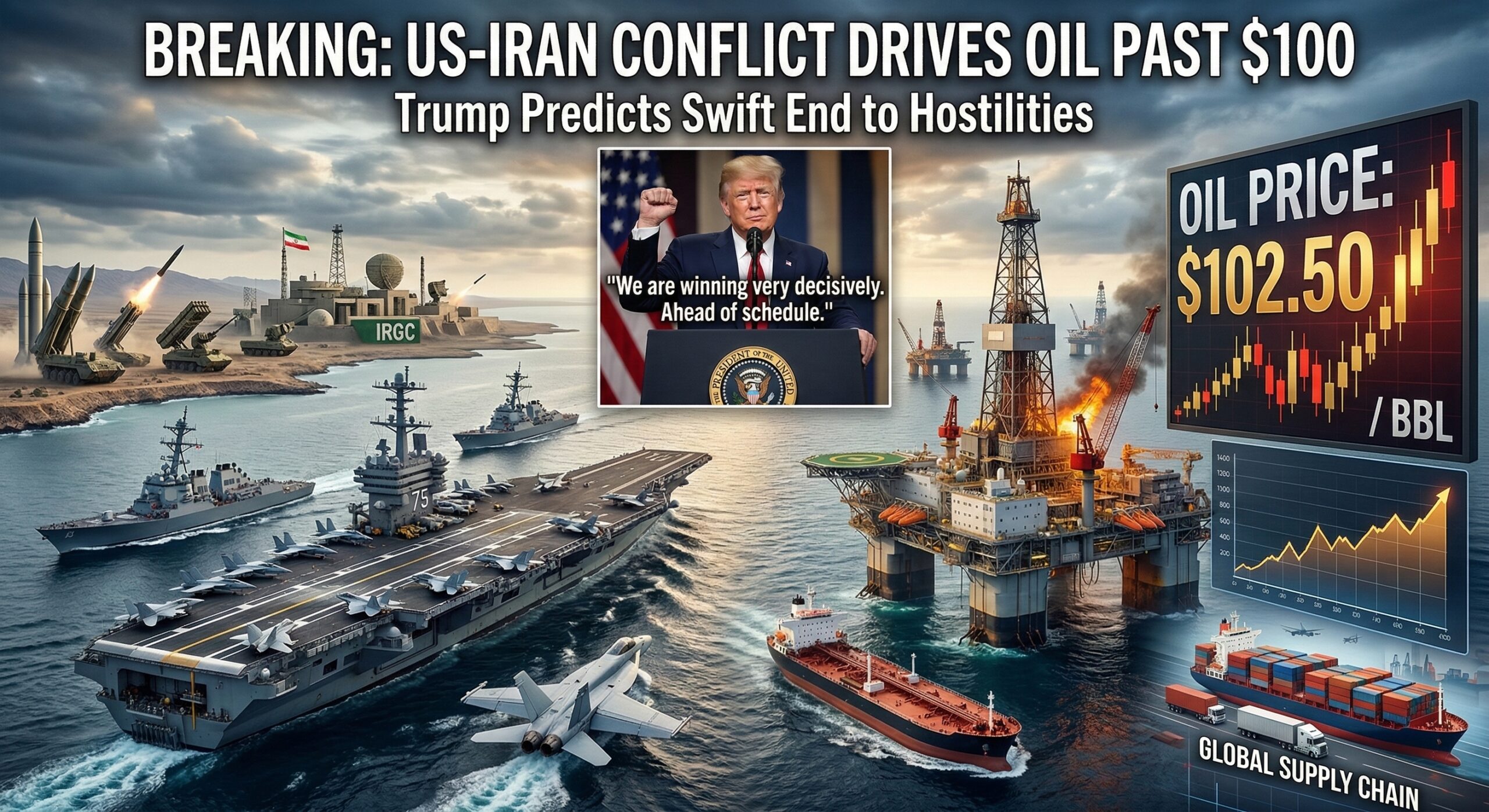
The large-scale military engagement between the United States, Israel, and Iran has officially entered a critical new phase, sending unprecedented shockwaves through the global macroeconomic landscape. As energy markets experience violent, multi-year volatility, world leaders and economic powerhouses are racing against time to stabilize the geopolitical board and prevent further international financial fallout.
At the absolute center of this global storm is the rapidly escalating US-Iran conflict, which has now decisively pushed global crude oil prices beyond a highly critical psychological threshold. This in-depth analysis breaks down the military, political, and economic ramifications of the ongoing crisis.
1. The White House Projects an “Ahead of Schedule” Resolution
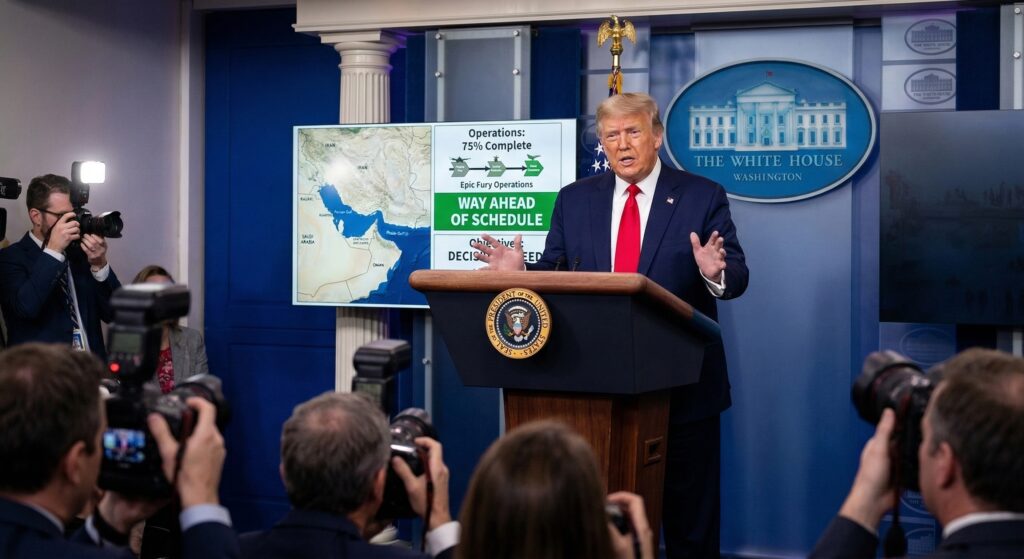
Addressing the nation and international allies regarding the ongoing strategic operations, President Donald Trump delivered a highly confident and definitive assessment of the situation in the Middle East. Speaking from a comprehensive press briefing in Florida on Monday, the 47th President of the United States projected that the strategic engagement would conclude much sooner than initially anticipated by the Pentagon’s military analysts.
Operation “Epic Fury” and Strategic Milestones
“We are winning very decisively. We are way ahead of schedule,” President Trump stated, emphasizing the sheer effectiveness and precision of the joint US-Israeli campaign. Initially, independent defense experts had projected that the military engagements and strategic containment efforts could last anywhere from four to five weeks, potentially dragging global markets into a prolonged state of uncertainty.
However, the current pace of operations—targeting critical military infrastructure while attempting to minimize broader regional escalation—suggests a swifter resolution to a crisis that has kept the international community on extreme high alert. The administration’s rhetoric is heavily focused on projecting domestic strength and reassuring global markets that the supply chain disruptions will be strictly short-term.
2. Leadership Shift in Tehran: The Mojtaba Khamenei Factor
This optimistic and aggressive timeline from the White House arrives during a highly sensitive and historic transition of power within Tehran. Recent intelligence and international reports confirm that Mojtaba Khamenei has officially been selected as the new Supreme Leader of Iran, succeeding his father, Ali Khamenei.
The Implications of a Wartime Succession
Historically, monumental leadership transitions during active wartime introduce massive layers of unpredictability into geopolitical conflicts. The consolidation of power by Mojtaba Khamenei is being closely monitored by Western intelligence agencies. Observers are analyzing whether the new Supreme Leader will adopt a more hardline approach to solidify his domestic authority or seek a diplomatic off-ramp to preserve Iran’s heavily sanctioned economy.
Despite this major structural shift in the Iranian political and religious hierarchy, the US administration maintains that its core strategic objectives in the region remain unchanged and are being executed with decisive speed, undeterred by the internal domestic changes within Tehran’s governing body.
3. The Economic Shockwave: Global Oil Prices Breach $100
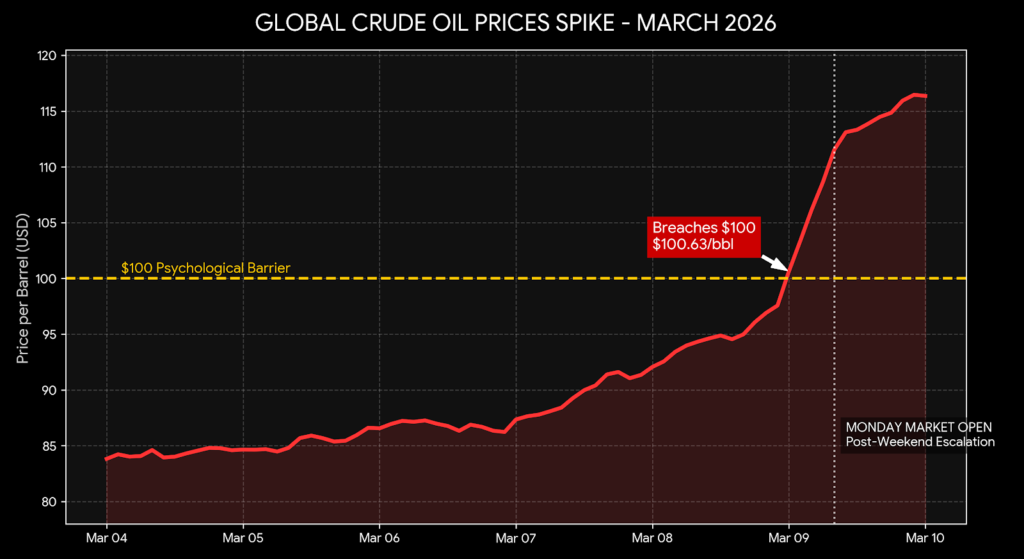
While the military and geopolitical outlook from Washington remains aggressively positive, the immediate global macroeconomic impact has been nothing short of severe. On Monday, following the weekend’s rapid escalation of the US-Iran conflict, global energy markets reacted with intense alarm.
The Strait of Hormuz: The World’s Energy Chokepoint
Global oil prices experienced violent intraday fluctuations, officially breaching the $100 per barrel mark—reaching their highest sustained levels since the global energy crisis of 2022. The primary catalyst for this massive price surge is the severe disruption in and around the Strait of Hormuz.
This narrow, highly contested waterway is a vital maritime chokepoint responsible for the transit of roughly one-fifth of the world’s daily oil consumption. With military naval operations expanding in the Persian Gulf, international shipping conglomerates and major oil tankers have been forced to abruptly halt transits or drastically reroute their vessels to avoid active conflict zones.
The OPEC+ Response
Furthermore, key OPEC members, including Saudi Arabia, have implemented strategic supply adjustments amid the widening regional instability. Rather than flooding the market to stabilize prices, cautious production controls have further tightened the global energy supply. This convergence of military risk and tight supply has created a “perfect storm” for bullish energy markets, driving prices upward with terrifying momentum.
4. Supply Chain Crisis: Severe Impacts on the US Retail and E-commerce Market
The skyrocketing cost of energy is not merely a high-level geopolitical concern; it is a direct, immediate, and potentially devastating threat to consumer markets, domestic manufacturing, and international trade. Rising global fuel costs are already translating into surging maritime logistics and freight rates across all major shipping lanes.
Maritime Freight and Air Cargo Surges
International freight forwarders are reporting immediate rate hikes and implementing “war risk” surcharges for vessels navigating the Middle East. Additionally, vessels rerouting around the Cape of Good Hope to avoid the conflict zone are adding weeks to transit times and burning millions of dollars in extra fuel.
The Threat to US Importers and Dropshipping Networks
For the US market, particularly in the highly competitive retail, consumer goods, and booming e-commerce sectors, these logistical nightmares present a massive hurdle. Businesses heavily reliant on international manufacturing and streamlined logistics are facing a severe margin squeeze.
- Inventory Delays: Extended shipping times mean that seasonal inventory may miss critical sales windows.
- Margin Compression: Surging logistics expenses could severely compress profit margins for online retailers and independent merchants.
- Pricing Strategies: Businesses are being forced to rapidly alter their pricing strategies. If freight rates continue to climb, American consumers will undoubtedly see a noticeable spike in the retail cost of everyday goods, from electronics to personal care products.
Entrepreneurs and e-commerce operators who rely on agile, cross-border supply chains are now scrambling to secure domestic inventory or negotiate new freight contracts before the holiday retail season is heavily impacted.
5. Domestic Political Ramifications and Economic Policy
In response to these alarming economic indicators, President Trump has issued stern warnings against any hostile actors attempting to deliberately blockade global energy supplies, promising “overwhelming and unprecedented force.”
The Inflation Anxiety
The Biden-Harris administration (in their previous tenure) and the current Trump administration both understand that sustained $100+ oil is a direct catalyst for massive consumer inflation. The Federal Reserve, which has been battling to keep inflation at its 2% target, is now watching energy prices closely. A sustained spike in crude oil could force the central bank to reconsider interest rate policies, potentially slowing down broader economic growth to cool inflation.
The administration is reportedly reviewing a series of emergency executive options aimed at curbing runaway prices. These options may include further tapping into the Strategic Petroleum Reserve (SPR) or incentivizing immediate domestic drilling and fracking operations in Texas and North Dakota to flood the domestic market with localized supply.
6. Looking Ahead: A High-Stakes Waiting Game for Global Markets
As the geopolitical situation unfolds hour by hour, institutional investors, retail business owners, and global financial markets are monitoring the crisis with bated breath. The volatility index (VIX) has spiked, and safe-haven assets like gold are seeing increased inflows.
The ultimate question remains unanswered: Can the swift, decisive military resolution promised by the White House outpace the growing, crushing economic pressure on global supply chains? If operations conclude “ahead of schedule” as President Trump claims, markets may see a rapid, violent correction downward in oil prices. However, if the conflict becomes entrenched, the global economy must brace for a protracted period of high inflation, strained logistics, and elevated energy costs.